

The first business jets were just fast taxis. You got in, flew somewhere, got out. Comfort meant having a seat that reclined slightly. Luxury meant free peanuts.
From Basic Transport to Flying Boardrooms
Then someone bolted a table between facing seats. Executives started reviewing contracts during flights. That table sparked a revolution. Designers removed forward seats and added swivel chairs around tables. They added power outlets for early laptops. Fax machines appeared in galleys. Phones connected via satellites. The jet stopped being transportation and became a workspace that happened to fly. Companies discovered their executives accomplished more during a cross-country flight than sitting in traffic for an hour.
Technology Drives Modern Innovations
Wi-Fi was a complete game-changer. Commuters sought their digital work environment. Older aircraft must now support modern devices’ bandwidth needs. Engineers got creative. They hid antennas in belly pods. They ran fiber optic cables through walls designed for basic wiring. They installed servers in baggage compartments. Modern jets carry more computing power than entire office buildings from twenty years ago.
But passengers don’t see the complexity. They see windows that darken at the touch of a button. Lights that adjust color based on time zones. Seats that remember their favorite positions. Tables that rise from the floor when needed. Everything works through apps on their phones. The same interface they use at home controls their aircraft cabin.
Materials and Craftsmanship Reach New Heights
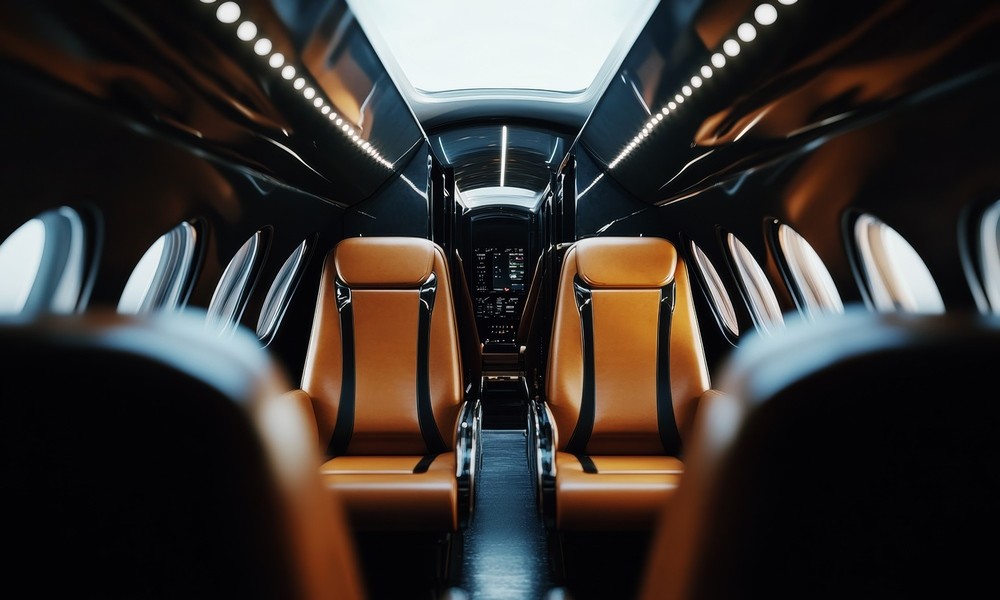
Walk into a modern business jet and you might think you’re in a Manhattan penthouse. Except this penthouse travels at 500 miles per hour through -60-degree air. Making materials survive those conditions while looking perfect takes serious engineering. That marble countertop? It’s actually carbon fiber with stone dust in resin, weighing 95% less than real marble. The gold fixtures? Titanium with vapor-deposited coating that won’t tarnish at altitude. The suede walls? Synthetic microfiber that resists stains, tears, and UV damage while feeling softer than real suede.
Weight obsession drives innovation. Every pound of interior is a pound less fuel capacity or range. So designers weigh thread choices for carpet. They calculate whether real wood veneer saves weight over printed alternatives. They debate whether passengers will notice if crystal glasses are replaced with polycarbonate. Usually, the fake stuff wins because it performs better while weighing less.
Comfort Becomes Paramount
Today’s VIP seating embarrasses first-class airline seats, with companies like LifePort bringing medical transport ergonomics to executive aviation, creating seats that prevent back pain during fourteen-hour flights. These aren’t just chairs; they’re personal comfort systems.
Motors adjust in twenty different ways. Heating elements warm specific zones. Cooling channels prevent sweating. Massage programs hit pressure points. Memory systems recall each passenger’s preferences. Some seats monitor heart rates and adjust automatically to promote relaxation.
Sleep became an obsession for long-range aircraft. Seats flatten into actual beds, not angled loungers. Mattresses use temperature-regulating gel. Cabins maintain sea-level pressure when possible. LED systems simulate sunset and sunrise to reset body clocks. Dedicated bedrooms have blackout shades and white noise generators. Showers use recycled water to provide ten minutes of hot water. Passengers land feeling as if they slept at home, not on a plane.
Conclusion
Business jet interiors keep pushing into territory once reserved for science fiction. Cabins learn passenger preferences through artificial intelligence. Holographic displays eliminate physical screens. Seats dynamically adjust to different body shapes. The next decade will bring innovations we can’t yet imagine. But the goal remains unchanged since those first corporate aircraft-help busy people use travel time better. Whether closing deals or catching sleep, tomorrow’s cabins will make today’s luxury jets look as dated as those 1960s propeller planes. The evolution never stops.
